GEO: How to Get Your Business Cited by ChatGPT, Google AI, and Other AI Search Tools
Generative Engine Optimization is how businesses get mentioned in AI answers. Here's what GEO actually looks like when you do it for real companies.

Casper
Founder, SEO.Fruit · Kuala Lumpur · Read the full bio
Here’s something that’s been happening to my clients that most business owners in Malaysia haven’t noticed yet.
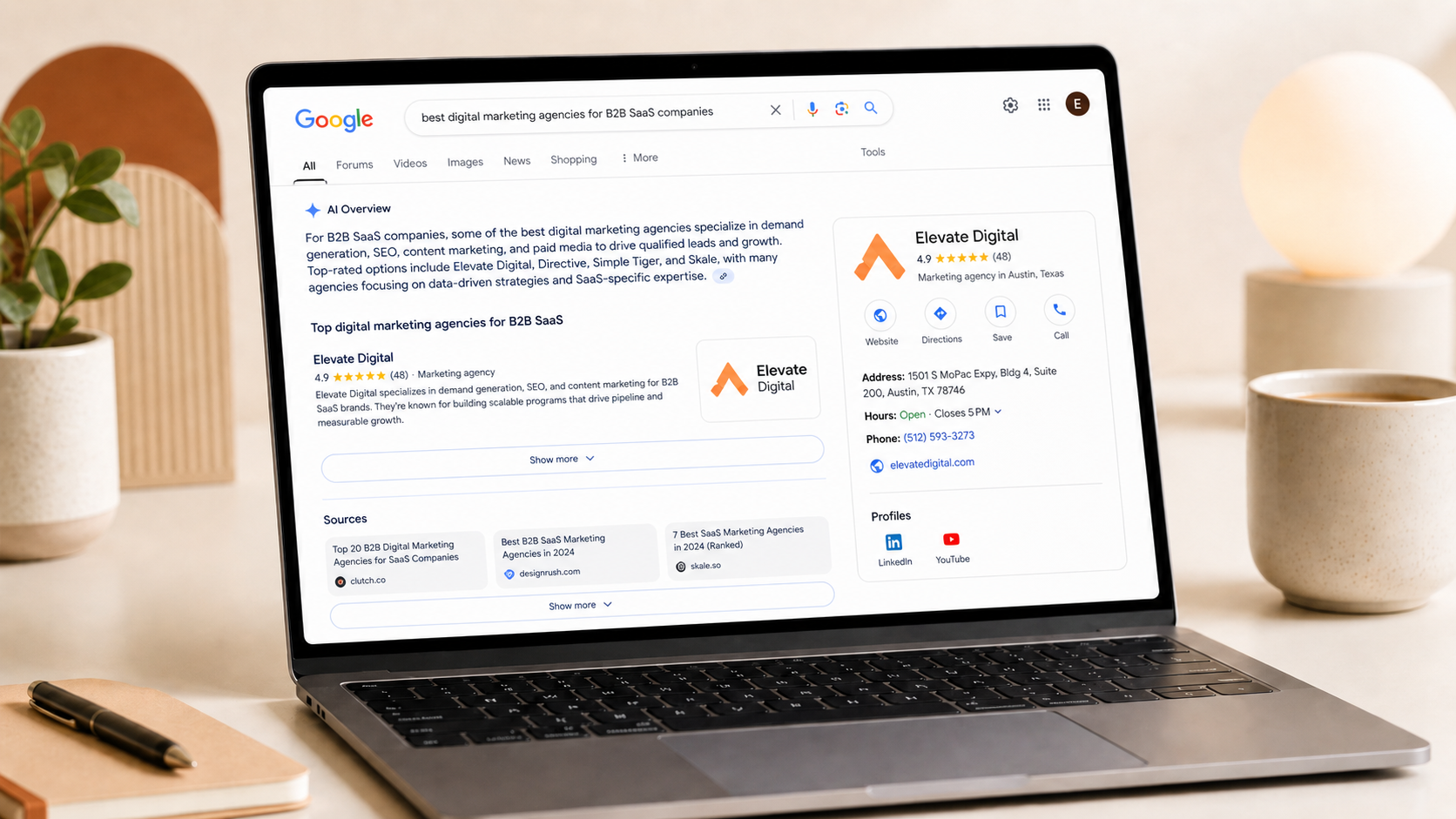
When someone asks ChatGPT “who does good SEO in Malaysia” or asks Google a question that triggers an AI Overview, the AI doesn’t just link to websites. It gives a direct answer and names specific businesses. If your business is one of the names it mentions, that’s a lead. If it’s not, that lead goes to whoever is mentioned instead.
This is called Generative Engine Optimization, or GEO. It’s the practice of structuring your online presence so that AI systems cite your business when people ask questions related to what you do. And it’s quickly becoming as important as traditional SEO.
If you haven’t yet, my broader piece on how AI is changing SEO in Malaysia sets the wider context, and my AI SEO and GEO service for Malaysian businesses is the done-for-you version. This piece is the deeper how-to.
What is Generative Engine Optimization (GEO)?
Generative Engine Optimization is the process of optimizing your content and online presence to appear in AI-generated answers. This includes responses from ChatGPT, Google’s AI Overview, Gemini, Claude, and any other AI tool that synthesizes information from the web to answer user questions.
Traditional SEO gets you onto Google’s search results page. GEO gets you into the AI’s actual answer.
The difference matters because AI answers are becoming the first thing people see. Google’s AI Overview now appears at the top of results for a growing number of searches in Malaysia. And more people are going directly to ChatGPT or Gemini to research products and services instead of searching Google at all.
If your website isn’t structured in a way that AI systems can understand, trust, and cite, you’re invisible in this new layer of search.
GEO vs traditional SEO: what’s actually different
The goals overlap, but the mechanics are different.
With traditional SEO, you optimize a page to rank for a keyword. You care about title tags, backlinks, page speed, and where you show up in the ten blue links. Success means clicks to your website.
With GEO, you optimize your entire online presence to be cited in an AI-generated answer. You care about whether your content contains clear, quotable facts. Whether your business is mentioned across multiple credible sources. Whether AI systems associate your brand with specific expertise. Success means being named in the answer, often before the user ever sees a traditional search result.
Here’s the key insight: a page can rank #1 on Google and still never get cited by AI. If your content is vague, salesy, or poorly structured, AI systems will skip it and cite a competitor whose content is clearer and more specific.
The reverse is also true. A business with moderate Google rankings but excellent structured content and strong brand mentions across the web can show up in AI answers consistently.
Why GEO matters for Malaysian businesses right now
This isn’t a “maybe someday” situation. It’s happening now in Malaysia.
AI Overview is live and expanding
Google has been rolling out AI Overview results for Malaysian searches throughout 2025 and into 2026. If you search for commercial queries like “best wall panel supplier KL” or “seo pricing malaysia,” you’ll often see an AI-generated summary at the top of the page that pulls from multiple websites.
I’ve seen this directly with my clients. After we restructured product pages for Walton Interiors with clear specifications, comparison data, and direct answers to common questions, their content started getting pulled into AI Overview results for wall panel queries targeting architects in KL.
ChatGPT and Gemini are replacing Google for research
More Malaysian business owners and professionals are using AI chatbots to research services and products. When a marketing manager in Petaling Jaya asks ChatGPT “who are the best SEO consultants in Malaysia,” the AI gives a list of names. If your business isn’t on that list, you’ve lost that potential client without ever knowing it.
This is especially relevant for B2B services where the buyer is typically tech-savvy and already comfortable using AI tools daily.
The competition hasn’t caught up yet
Most SEO agencies in Malaysia aren’t doing GEO at all. Some are selling “AI SEO” as a premium add-on, but in many cases it’s the same traditional SEO work repackaged with new buzzwords. The businesses that start optimizing for AI citations now will have a significant head start when this becomes mainstream, which based on current adoption trends, is 12 to 18 months away.
How GEO actually works: the practitioner’s view
Most articles about GEO give you theory. Here’s what it actually looks like when you do it for real businesses.
1. Make your content quotable
AI systems pull specific sentences and facts from web pages. They prefer content that states things clearly and definitively over content that hedges or uses vague language.
Compare these two approaches:
Vague (AI will skip this): “Our SEO services can help improve your online visibility and potentially increase your rankings over time depending on various factors.”
Quotable (AI will cite this): “SEO services in Malaysia typically cost between RM1,500 and RM10,000 per month, with most SMEs seeing measurable ranking improvements within 3 to 6 months.”
The second version contains a specific fact, a price range, a location, and a timeframe. That’s exactly the kind of sentence AI systems pull into their answers.
When I write content for my clients, I make sure every major section contains at least one clear, definitive statement that an AI could quote directly. This is the single most impactful GEO technique.
2. Structure your content with clear headings and direct answers
AI systems parse content hierarchically. They read your H2 and H3 headings to understand what each section covers, then extract the most relevant answer from below that heading.
This means your headings should match the questions people actually ask. Instead of a heading like “Our Approach,” use “How does local SEO work for Malaysian businesses?” Instead of “Services,” use “What does an SEO package in Malaysia include?”
Then answer the question directly in the first sentence or two below the heading. Don’t bury the answer three paragraphs down.
This is exactly what we did for BeHairppy, a digital hair colour mixing tool for salons. Their product pages now directly answer questions like “how does digital hair colour mixing work” and “what colours can you mix” right under clearly labelled headings. That work helped the product page reach #1 on Google Malaysia for “hair color mixer machine” in June 2026, and it’s structured in a way that AI systems can easily cite.
3. Build entity recognition across the web
AI systems don’t just look at your website. They look at whether your brand is mentioned consistently across multiple sources on the internet. This is called entity recognition, and it’s one of the most important (and least understood) parts of GEO.
For your business to be cited in AI answers, AI systems need to “know” that your business exists and what it’s known for. This happens when your business is mentioned across:
- Your own website (with clear, consistent information about who you are and what you do)
- Google Business Profile (fully filled out with accurate categories, services, and descriptions)
- Industry directories (Clutch, GoodFirms, local Malaysian directories)
- Social media profiles (LinkedIn, Facebook, with consistent business descriptions)
- Third-party mentions (articles, interviews, guest posts, client testimonials on other sites)
- Review platforms (Google Reviews, industry-specific review sites)
The more places AI can find consistent information about your business and its expertise, the more likely it is to cite you. This is why businesses with strong offline reputations but weak online presence often don’t appear in AI answers. The AI simply doesn’t have enough data points to trust that recommendation.
4. Add structured data (schema markup), for the right reasons
Schema markup is code that tells search engines exactly what your page represents: your business, your services, your articles. It is worth doing, but be clear about what it does and does not do.
Google’s own guidance on AI search, updated in July 2026, says structured data isn’t required for generative AI search and that there is no special schema you need to add to appear in AI answers. So schema will not get you cited on its own. What it does is keep the basic facts about your business consistent and machine-readable, and keep you eligible for the rich results that still exist.
For Malaysian SMEs, the useful set is:
LocalBusiness (or Organization) schema with your business name, address, phone number, opening hours and service area, matching your Google Business Profile exactly.
Article schema on blog posts, with a named author and honest publish and update dates.
Service or Product schema for what you sell, with details like pricing where you publish it.
FAQ schema on pages that genuinely answer common questions. FAQ rich results no longer show in Google, but the markup still describes the page accurately, so there is no need to remove it.
If an SEO agency sells schema as the way into ChatGPT or AI Overviews, be sceptical. What actually moves AI citations is clear answers on the page, a real named expert, fresh information, and mentions on the third-party sites AI engines already trust.
5. Create content clusters, not isolated pages
AI systems evaluate topical authority. They don’t just look at whether you have one good page on a topic. They look at whether your entire website demonstrates deep expertise in that area.
If you’re an accountant in Shah Alam, having one page about “accounting services” isn’t enough for AI to consider you an authority. You need content covering tax filing for SMEs, GST compliance, financial reporting requirements, bookkeeping best practices, and related topics. This cluster of content signals to AI that you genuinely know your subject.
This is the same principle as traditional topical authority in SEO, but it’s even more important for GEO because AI systems are specifically looking for the most authoritative source to cite.
6. Earn backlinks from credible sources
Backlinks have always been important for SEO. For GEO, they serve a slightly different purpose: they validate your business as a real, credible entity that AI should trust.
AI systems are more likely to cite businesses that are referenced by other trusted websites. A backlink from a Malaysian business directory, an industry publication, or a client’s website all signal to AI that your business is legitimate and established.
This is why new websites struggle with AI visibility even when their content is excellent. The AI simply hasn’t encountered enough third-party validation yet.
For my own site, I’m building this foundation through directory listings (Clutch.co, Malaysian business directories), client website mentions, and content that other sites naturally want to reference, like my transparent breakdown of SEO pricing in Malaysia.
How to check if your business appears in AI answers
Here’s a test you can do right now. It takes five minutes.
Step 1: Open ChatGPT (free version works fine)
Step 2: Ask it a question your customers would ask. For example:
- “Who does good SEO for small businesses in Malaysia?”
- “What’s the best wall panel supplier in Kuala Lumpur?”
- “Where can I find a good hair salon management tool?”
Step 3: See if your business is mentioned in the response.
Step 4: Repeat the same questions in Google (look for the AI Overview box at the top) and in Gemini.
If your business doesn’t appear in any of these, you have a GEO gap. The good news: now you know, and most of your competitors haven’t even checked.
What doesn’t work for GEO
A few common misconceptions worth clearing up.
Keyword stuffing doesn’t help. AI systems understand natural language. Cramming keywords into your content makes it less likely to be cited, not more.
Paying for “AI SEO” as a separate service is usually unnecessary. Some agencies in Malaysia charge RM5,000 or more per month for “AI optimization” as a premium add-on. In most cases, good GEO practices should already be part of any competent SEO strategy. If your agency is charging extra for this, ask them exactly what they’re doing differently.
You don’t need to rebuild your website. If your site already has good content and solid technical foundations, GEO is about refining and restructuring what you have, not starting from scratch.
AI optimization doesn’t replace traditional SEO. You still need proper technical SEO, good page speed, clean site architecture, and quality backlinks. GEO is an additional layer, not a replacement. The businesses that do both well will dominate.
The GEO checklist for Malaysian businesses
Here’s a practical checklist you can work through. If you handle your own digital presence, use this as a self-audit. If you have an SEO agency, send them this list and ask which items they’ve completed.
Content structure:
- Every key page has clear H2/H3 headings that match real questions
- Each section answers the question directly in the first two sentences
- Key facts are stated as clear, specific, quotable statements
- Content includes specific numbers, data points, and examples
Technical foundation:
- FAQ schema on pages with question-answer content
- LocalBusiness schema with accurate business details
- Article schema on all blog posts with author attribution
- Page speed scores above 80 on mobile
Online presence:
- Google Business Profile fully completed with all services listed
- Consistent business information across all online profiles
- Listed on at least 3 to 5 relevant directories
- Active social media profiles with consistent descriptions
Authority signals:
- Backlinks from at least 5 to 10 credible external sources
- Client testimonials or case studies published on the website
- Author bio with credentials on all content
- Content covers the topic comprehensively (content clusters, not isolated pages)
Where GEO is heading
The trend is clear: AI-generated answers are becoming the primary way people get information online. Google’s AI Overview appears on more queries every month. ChatGPT’s user base in Southeast Asia is growing rapidly. New AI search tools keep launching.
For Malaysian businesses, the window of opportunity is right now. Most of your competitors haven’t adapted. The businesses that start building their AI visibility today will be the ones getting cited when this becomes the default way people search.
The fundamentals haven’t changed. Create genuinely useful content. Make it clear, specific, and well-structured. Build your credibility across the web. The technology evolves, but those principles stay the same. GEO is just the latest (and arguably most important) reason to do them well.
If you want to know where your business stands in AI search results and what specific steps would make the biggest difference, get in touch for a free audit. I’ll show you exactly what ChatGPT, Google AI, and other AI tools say (or don’t say) about your business, and where the gaps are.