How AI Is Changing SEO in Malaysia (And What SMEs Should Do About It)
AI is reshaping how Malaysians search and find businesses. Here's what's actually changed, what's hype, and what your business needs to do right now.

Casper
Founder, SEO.Fruit · Kuala Lumpur · Read the full bio
If you run a business in Malaysia and rely on Google to bring in customers, something important has changed in the last 12 months. And most business owners I talk to haven’t noticed it yet.
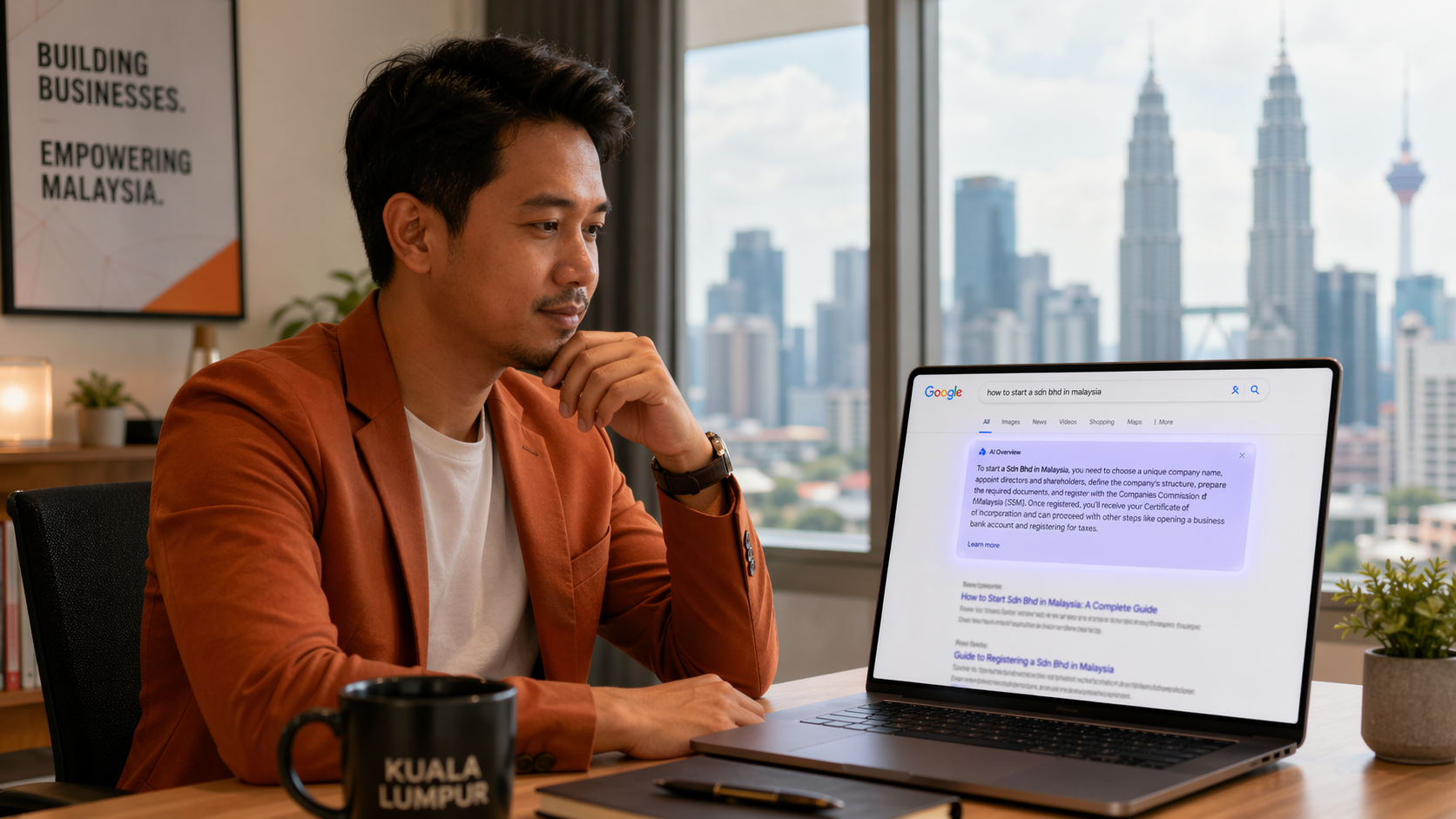
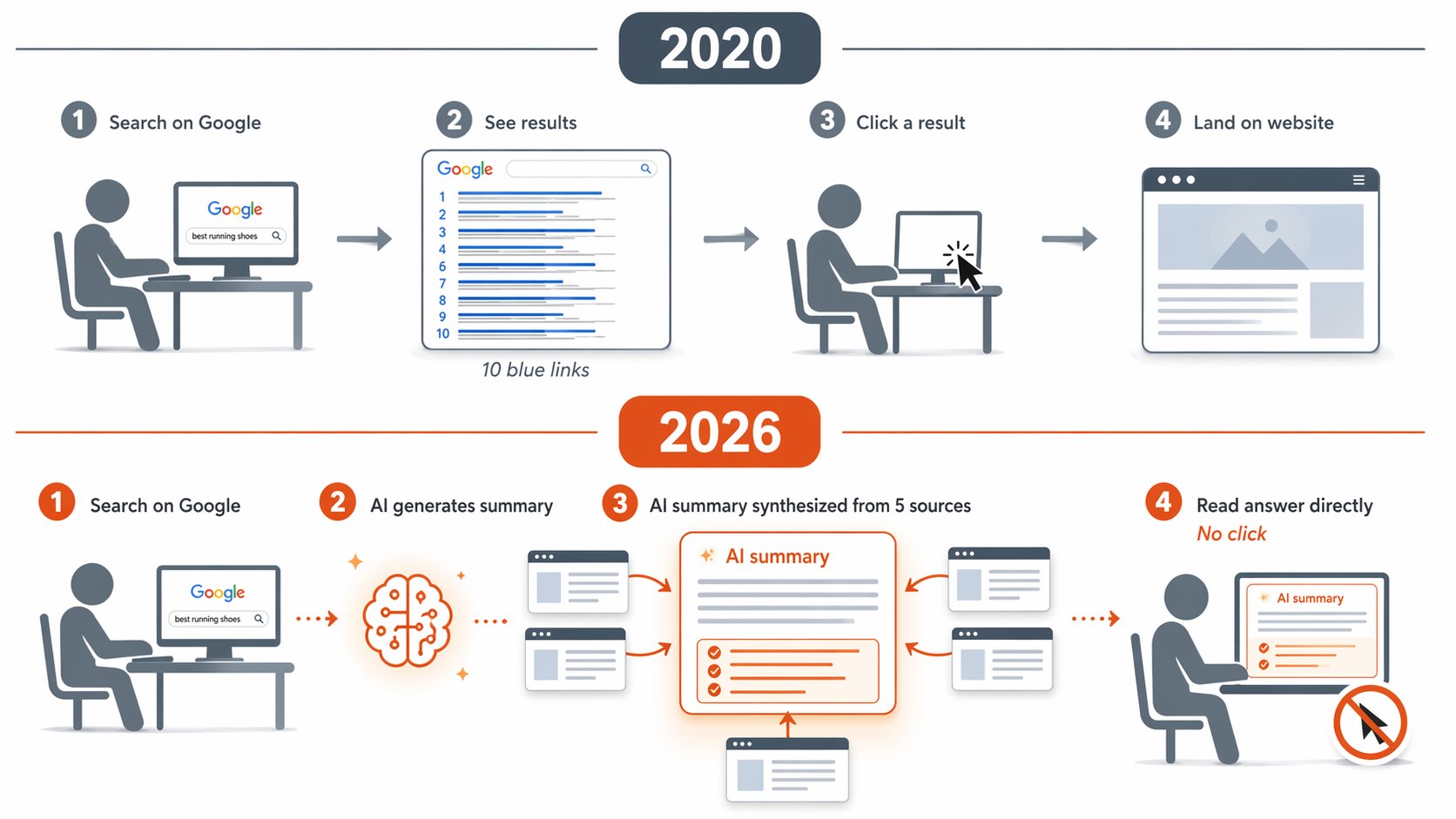
AI is now sitting between your potential customers and your website. When someone searches “best wall panel supplier in KL” or “hair colour mixing tool for salons,” Google doesn’t just show a list of blue links anymore. It generates an AI-powered summary at the top of the page, pulling answers from websites it trusts, and serves that answer before the searcher ever clicks on anything.
This changes everything about how SEO works. And if your website isn’t set up for it, or if your SEO agency hasn’t adapted their approach, you’re losing visibility you don’t even know about.
What’s actually happening with AI and search in Malaysia
Let’s cut through the buzzwords. Here’s the real picture.
Google has been rolling out a feature called AI Overview (previously called SGE, or Search Generative Experience). When someone types a question into Google, instead of just showing you ten blue links, Google now generates a summary answer at the top of the results page using AI.
This AI-generated answer pulls from multiple websites, cites its sources, and tries to give the searcher a complete answer without them needing to click through. For some queries, especially informational and comparison searches, this AI box takes up the entire first screen.
In Malaysia, AI Overview has been gradually appearing for more and more search terms throughout 2025 and into 2026. If you search for things like “seo pricing malaysia” or “best CRM for small business Malaysia,” you’ll likely see one.
Why this matters for Malaysian businesses
The practical impact is straightforward: if your website is one of the sources Google’s AI pulls from, you get visibility at the very top of the page. If it’s not, you’re pushed further down, even if you technically “rank” on page one.
I’ve seen this firsthand with my clients. One of them, a wall panels supplier targeting architects in KL, started appearing in AI Overview results after we restructured their product pages with clearer specifications and comparison data. The other sites ranking for the same keywords didn’t get cited because their content was vague and sales-heavy.
This isn’t a future problem. It’s happening right now.
This is exactly what my AI SEO and GEO service for Malaysian businesses is built around: getting you cited inside the AI answer, not just ranked in the links below it.
It’s not just Google anymore
Here’s the part most SEO agencies in Malaysia aren’t talking about yet: Google isn’t the only AI that’s sending (or redirecting) traffic.
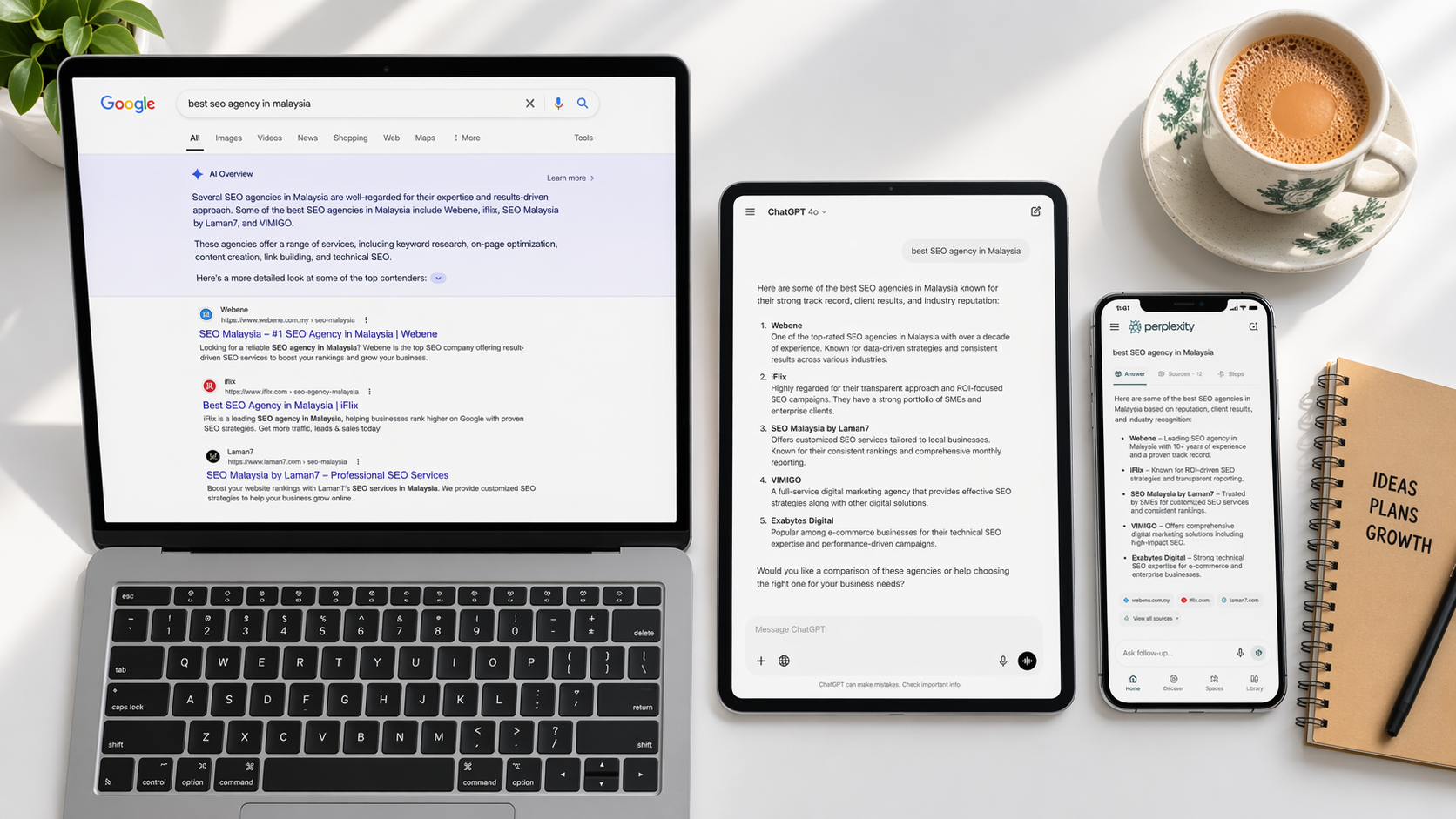
People are now using ChatGPT, Perplexity, Claude, and Gemini to research products and services. When a business owner in Petaling Jaya asks ChatGPT “who does good SEO in Malaysia,” the AI gives an answer. If your business is mentioned, that’s a lead. If it’s not, that lead goes to whoever is mentioned.
This is sometimes called Answer Engine Optimization (AEO) or Generative Engine Optimization (GEO). The names are new, but the principle is simple: make your website the source that AI systems trust and cite. I’ve written a practical guide on how to get cited by ChatGPT, Google AI Overview, Gemini, and other AI search platforms, with the specific structural and content fixes that work in 2026.
The businesses that win here are the ones with clear, well-structured, authoritative content. AI models don’t cite vague marketing copy. They cite specific, useful information.
What’s hype and what’s real
Let me be direct about this because there’s a lot of noise in the market right now.
What’s real
AI Overviews are live in Malaysia. They appear on a growing number of search queries. Your content either shows up in them or it doesn’t.
AI chatbots influence buying decisions. More people are using AI tools to research before purchasing. If you sell B2B services, this is especially relevant because your buyers are often tech-savvy decision-makers who use these tools daily.
Structured, specific content performs better. Content that clearly answers questions, uses proper headings, includes real data, and is well-organized is more likely to be cited by AI. This was already true for traditional SEO, but it matters even more now.
Traditional SEO still works. You still need proper technical SEO, good page speed, clean site architecture, relevant keywords, and quality backlinks. AI hasn’t replaced any of that. It’s added a new layer on top.
What’s hype
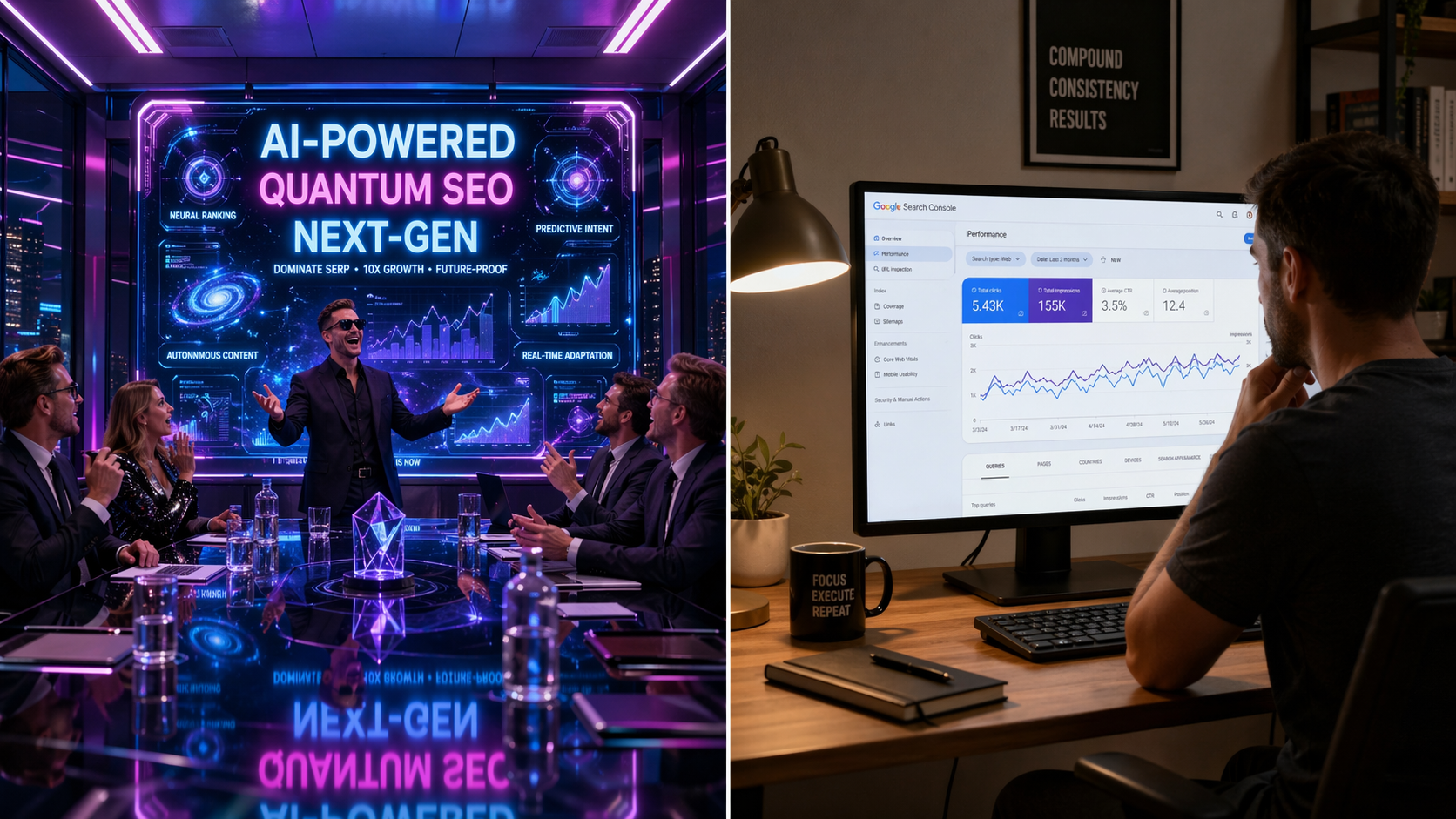
“AI SEO” as a separate service you need to buy. Some agencies in Malaysia are now selling “AI SEO” as a premium add-on at RM5,000 or more per month. In most cases, what they’re doing is the same good SEO practices that should already be part of your package: structured content, schema markup, clear answers to user questions. If your agency is charging extra for this, ask them what exactly they’re doing differently.
You need to completely redo your website for AI. No. If your site already has good content, proper structure, and solid technical foundations, you’re most of the way there. The adjustments needed are more about refining what you have, not rebuilding from scratch.
AI will kill SEO. This gets said every year about something. SEO isn’t dying. The way people search is evolving, and SEO is evolving with it. The businesses that adapt will do better. The ones that ignore it will fall behind. That’s always been the case.
What you should actually do about it
Here’s the practical checklist. Whether you handle your own SEO or have an agency doing it for you, these are the things that need to be happening.
1. Structure your content so AI can read it
AI systems pull answers from content that’s well-organized. This means:
- Use clear H2 and H3 headings that match what people actually search for
- Answer the question directly near the top of each section (don’t bury the answer)
- Use short, definitive sentences for key facts (AI prefers “SEO in Malaysia typically costs RM1,500 to RM10,000 per month” over “costs can vary depending on many factors”)
- Include specific numbers, data points, and examples wherever possible
2. Add structured data (schema markup)
Schema markup is code that tells Google exactly what your content is about. For Malaysian SMEs, the most useful types are:
- FAQ schema for question-and-answer sections
- LocalBusiness schema for your business details (address, phone, operating hours)
- Article schema for blog posts
- Product or Service schema for what you sell
If your agency isn’t implementing schema markup on your key pages, that’s a gap worth flagging. It’s not complicated work, and it makes a measurable difference for AI visibility.
3. Write content that answers real questions
Look at what your customers actually ask you. Those questions are exactly what people are typing into Google and AI chatbots.
For every key question, you should have a clear, honest answer on your website. Not buried in a PDF or hidden behind a contact form, but right there on the page where Google can read it.
I do this for my own clients. For example, when we worked with BeHairppy, a digital hair colour mixing tool for salons, we made sure their product pages directly answered questions like “how does digital hair colour mixing work” and “what colours can you mix.” That work helped the product page reach #1 on Google Malaysia for “hair color mixer machine” in June 2026.
4. Build topical authority, not just individual pages
AI systems don’t just look at one page. They evaluate whether your entire website is authoritative on a topic. If you’re a plumber in Shah Alam, having one page about “plumbing services” isn’t enough. You need content that covers emergency plumbing, pipe replacement, water heater installation, bathroom renovation plumbing, and so on.
This cluster of related content signals to both Google and AI systems that you genuinely know your subject. One-page websites with thin content will struggle more and more as AI-driven search becomes the norm.
5. Make sure your business shows up in AI answers
Here’s a quick test you can do right now:
- Open ChatGPT, Perplexity, or Google Gemini
- Ask it a question your customers would ask (for example: “who does SEO for small businesses in Malaysia”)
- See if your business is mentioned
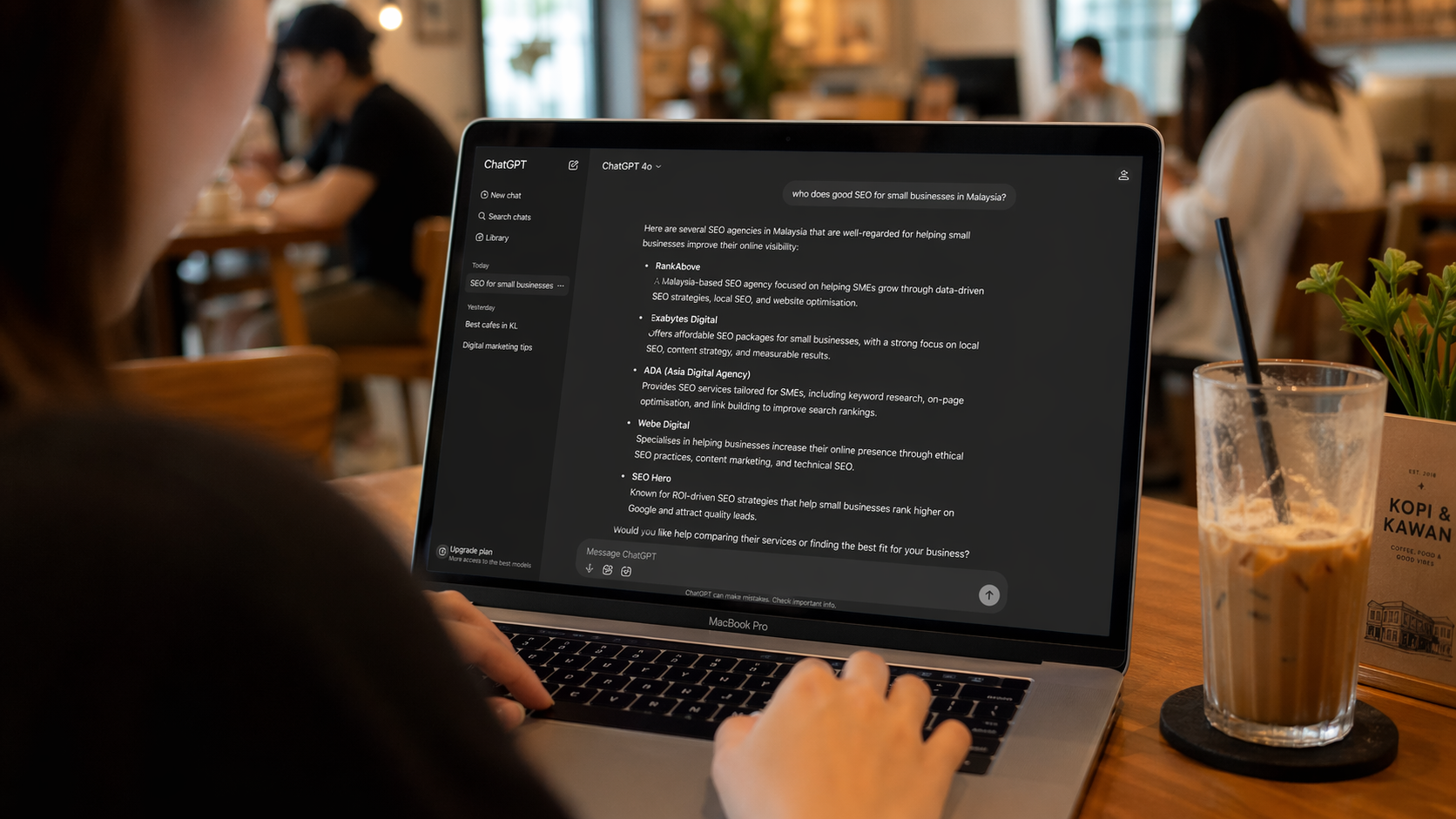
If you’re not showing up, that’s a visibility gap you need to close. The fix is usually a combination of better content, more backlinks from credible sources, and stronger online presence across multiple platforms (your website, Google Business Profile, directories, social media).
6. Ask your SEO agency the right questions
If you’re paying an agency for SEO, here’s what to ask them in your next review call:
- “Are we appearing in any AI Overview results? Which ones?”
- “What are you doing to optimize our content for AI citations?”
- “Have you implemented schema markup on our key pages?”
- “Are you tracking our visibility in ChatGPT or Perplexity?”
If they look confused or tell you “we’ll add that to the roadmap,” that’s a signal. These aren’t future considerations. They should already be part of any competent SEO strategy in 2026.
For reference, here’s what you should be paying for SEO in Malaysia and what deliverables to expect at each price point. If you’re paying RM3,000+ per month and your agency can’t answer these questions, you might be overpaying for an outdated approach.
Where this is heading
AI search is not going away. If anything, it’s accelerating. Google’s AI Overviews are appearing for more queries every month. ChatGPT and Perplexity are gaining users in Malaysia rapidly. The next generation of customers will search differently than the current one.
The good news for Malaysian SMEs: the bar is still relatively low. Most of your competitors haven’t adapted yet. The businesses that start optimizing for AI visibility now will have a significant head start by the time this becomes mainstream.
The fundamentals haven’t changed. Build a good website. Create genuinely useful content. Make it easy for both humans and machines to understand what you do and why you’re good at it. The technology evolves, but that principle stays the same.
This is exactly the kind of work SEO.Fruit was built for. Modern SEO that wins in both Google and AI search, by one senior operator, for Malaysian SMEs.
If you want to understand where your site stands today, whether it’s showing up in AI results, and what specific steps would make the biggest difference, get in touch for a free audit. I’ll show you exactly what Google and AI systems see when they look at your site, and where the gaps are.